
Life of a Fellow: Joyce
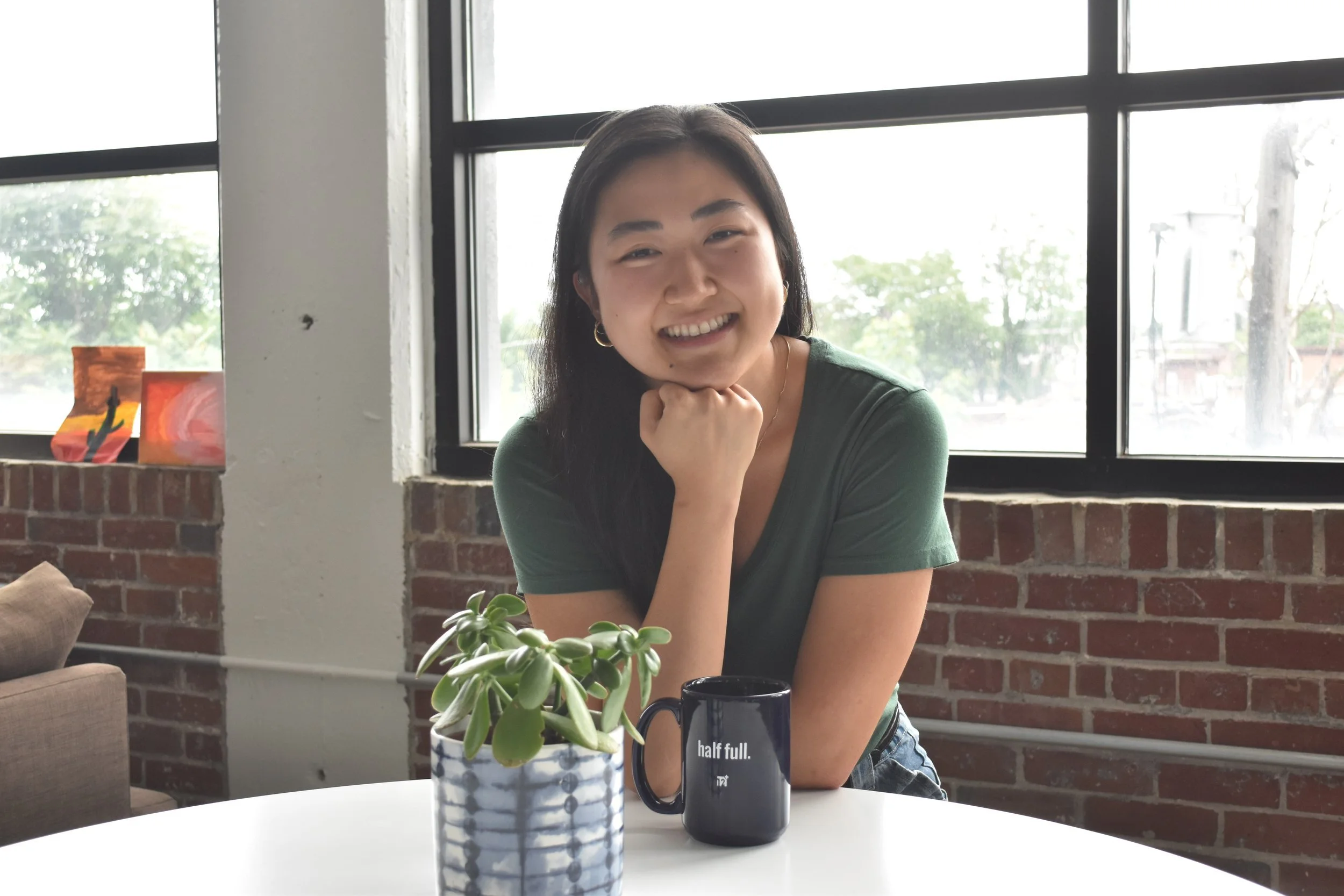
Meet Joyce, our Fellow at Kensington High School! In the few months since the start of the school year, she’s learned so much about her students and about herself. Check out her blog post below to hear how her journey’s been so far!
Q: WHO are YOU?
My name is Joyce. I’m an ISTJ, Enneagram 2, C-style DISC leadership profile, Gemini, Ravenclaw, and Neutral Good. I like reading, running, writing, and fried chicken.
Q: So uh, what exactly do you do as a fellow?
The short answer is, I care about students. Therefore, as a fellow at Kensington High School (KHS), I do everything I (reasonably) can to support all students, especially seniors, figure out their plans after graduation.
Practically, work includes
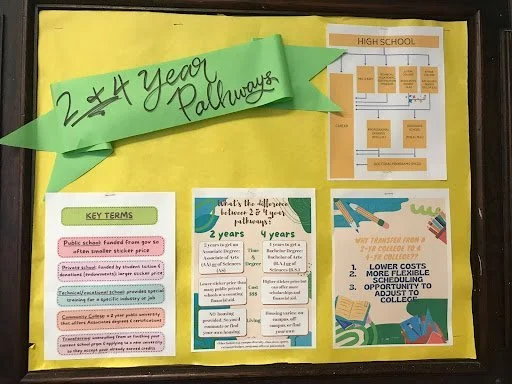
researching various job/trade pathways students could take, and refining students’ hopes and plans for their futures
advising students through college applications & personal statements
patiently tutoring students in all subjects
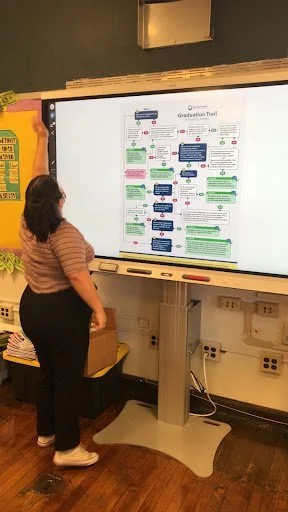
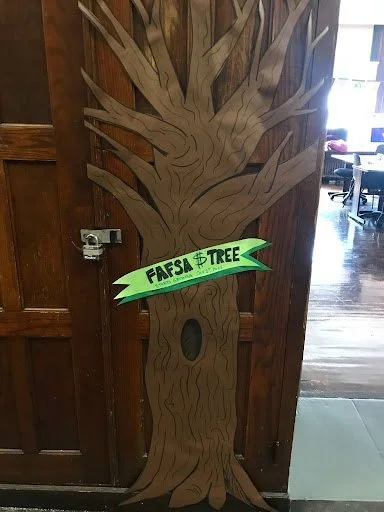
Walking students through applying to FAFSA
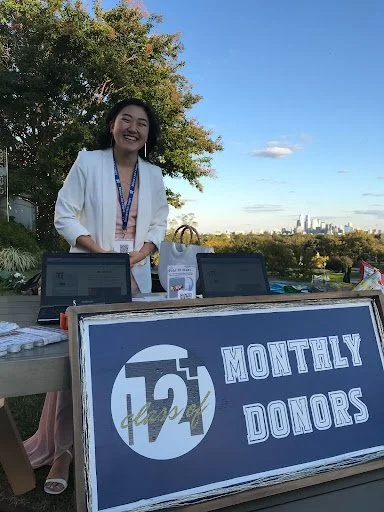
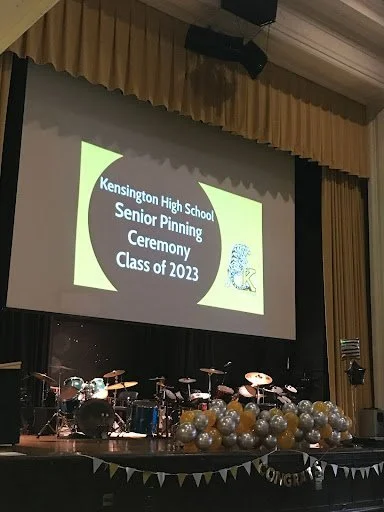
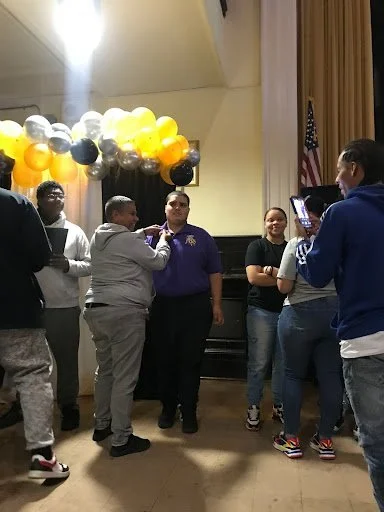
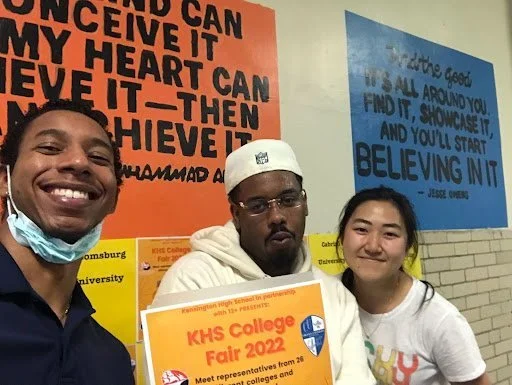
planning and supporting various workshops (e.g. trade schools, graduation pathways) or school events (e.g. college fairs, family appreciation events)
Relationally, work encompasses
constantly reminding students of their incredible worth and potential
motivating students through difficult assignments
listening to the newest drama of who likes who and who said what
calming students down after conflicts with staff or peers
comforting students dealing with trauma in their personal lives
celebrating successes like job interviews and program acceptances.
Q: What’s something you learned?
In the beginning, I felt like an anxious mom: worrying about my kids’ futures and whether they’re doing their work. The moment a student walks through our door, even before we’ve exchanged introductions, I’m overwhelmed by the urge to know exactly where they are with their grades, their career plans, their FAFSA application, their goals, and etc. etc. etc.
But nobody likes being confronted by a stressful taskmaster, especially when all you wanted to do was take a break from school…especially when you never signed up for this micromanaging…and especially when you only just met the overly excited lady trying to make you do work. My frequent questions and annoying prompts for students to “be productive” can deter students from opening up honestly and coming to us for help. While of course my nagging reminders stem from genuine concern and care, students don’t know that because they don’t know me! They don’t trust me - naturally. And trust takes time.
Unfortunately I’m not a particularly patient person. But I’ll do whatever I can to support my students as they achieve their potential, so if that takes time, I’ll put in the time. I’ve learned that the most effective way to start advising students is to state what I thought was obvious but actually can’t be reiterated enough: “I’m here because I care about you. I’m here because I believe in your immense value and potential. I’m here because I want to help you bring that into reality and I’m excited to be part of the process.”
After I’ve started sharing that authentically, I’ve been surprised and encouraged at how much more students invest and engage. In building trust, we can more effectively work together in actualizing their goals, with more fun along the way.

Q: What has been the hardest part of the job for you?
Some of these challenges might come across like I’m blaming the students for their “own failures.” To be clear, I view their knowledge or skill gaps largely as a product of a tremendously broken education system that has failed them and their families. While I do expect students to work with where they are and to always strive to improve, I understand that my life is not a result of my efforts alone in a vacuum - nor are my students’ lives 100% a result of their actions. Each person is a sum of their own agency, yes, but also a consequence of all the people, money, environments, and circumstances that have shaped them.
Rather, the struggles I face are largely because I need to deal with my own emotions that arise when I realize a student is far behind, where I ignorantly assumed a high schooler should be, in a certain skill set.
Emotional/relational challenges
Having to manage my disappointment when I realize I need to teach students skills that they should’ve learned years ago if their school or support systems met their needs properly, skills such as:
how to read an analog clock
how to find perimeter or area of rectangles
how to spell “different” and “Philadelphia”
Waiting impatiently for students to type sentence with two fingers
When students skip lunch because it’s nasty but then they’re hungry and can’t focus and aren’t allowed to bring their own food to school
Needing to break unhappy news at the reality of the situation
E.g. students want to join the NBA but they don’t have much basketball experience
E.g. students want to go to ___ college but their GPA is too low
Holding emotional space for students and for myself when they share mental health struggles and traumas that I have limited power to impact
E.g. disordered eating, recently passed family members
Fighting against the learned helplessness, low expectations, and low self-value imprinted in students’ beliefs
Structural Challenges
Going to bed early despite my lifelong night owl genes in order to have the energy and focus that my students deserve
Feeling like an insignificant cog adjacent to the humongous, redundant, inefficient, foolish, frustrating, uncommunicative, mysterious machine that is the School District of Philadelphia
Q: What has made the experience worth it for you then? What’s rewarding about the job?
Different things are motivating for different people, but here’s a shortlist of the aspects I find meaningful, rewarding, and fun:
Hugs from students
Genuine eager hellos from students “Heyyyyy Ms. Joyce!”
Students supporting each other genuinely, not jealousy
E.g. dapping up on college acceptances
Students taking ownership of their future - being proactive and eager, coming up with “homework” or next steps for themselves instead of waiting for me to tell them what to do
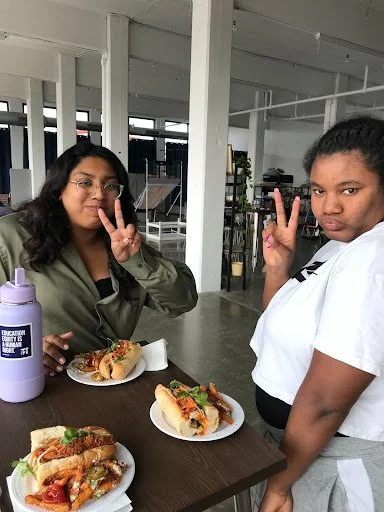
When students eat lunch and convince others that the lunch is at least edible and sometimes even good
E.g. “man this breadstick makes me feel like I’m at Olive Garden.” “yo, really? Is it good? I’ve never tried it”
When students finish a project/assignment, and feel proud of themselves for working hard - as they should!
When students tell me they signed up for a library card :)
Reading “Holes” by Louis Sachar (GREAT read) with a student who doesn’t like reading
When I can tell a student believes me when I say I believe in them (it’s a softening, more eye contact, and maybe even some emotion)
Getting educated on Philly slang
E.g. I’m often called federal. It’s not really a compliment
Changing students’ attitudes around certain subjects
E.g. hating math doesn’t mean you stop trying or give up
Getting to watch students grow and develop over time as they advocate for themselves and make concrete plans in courageously facing uncertain futures
Q: What are you grateful for?
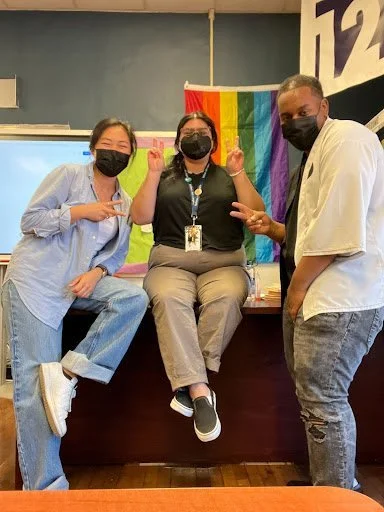
I’m thankful that 12+ truly cares for not just their students, but also for their staff and the hierarchy of care is clear. Instead of purporting an unhealthy tunnel-vision focused solely on supporting students’ needs and sacrificing absolutely everything for them, the staff at 12+ (especially Sierra, my Site Director at KHS, and Francesca, the Philadelphia Impact Director) truly want me to be healthy and happy. As my higher-ups, they also explicitly do not expect me to be their major emotional support, which is honestly relieving. Furthermore, this emphasis of a healthy life and work balance has been woven throughout my entire experience.
During the first few days of training, we had sessions on self care, having an action plan under stress for rest and support, and putting your needs first. Over the course of the fellows year, Brianna, the Fellowship Director, has regular check-in meetings and forms so in addition to the organic network of care and relationship at 12+, there are clear official channels on how to get help. In the day to day at our Plus Center, besides always being asked if I might need support, I’ve been reminded to take proper lunch breaks and to utilize my sick days. When we had an unusual crisis at work, the next day we were encouraged to take the day off and rest.
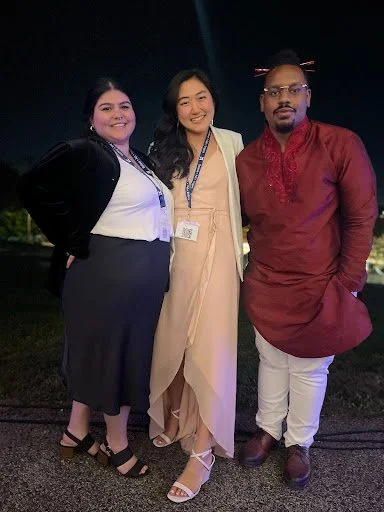
Fundamentally, I’m grateful for all my coworkers, especially Francesca, Sierra and Quram. They frequently show appreciation when I’m not expecting it and seek to serve in big and little ways like offering rides to the station, bringing in fresh bagels with all the different spreads, and even sacrificing their time to long constructive conversations on how I can better differentiate my needs and say “no” to draining commitments. Just like we genuinely care about our students, they genuinely care about my well-being too, and I’m so glad I get to do this work with them.