
Life of a Fellow: Mairead
Mairead majored in Psychology and minored in Sociology and Women’s & Gender Studies at Moravian College. Next year, she will pursue her Master’s of Education in Educational Psychology: Applied Developmental Science at the University of Virginia. Her passion for helping students achieve their goals and develop self-confidence is evident in her work as a Fellow at Hill-Freedman World Academy!
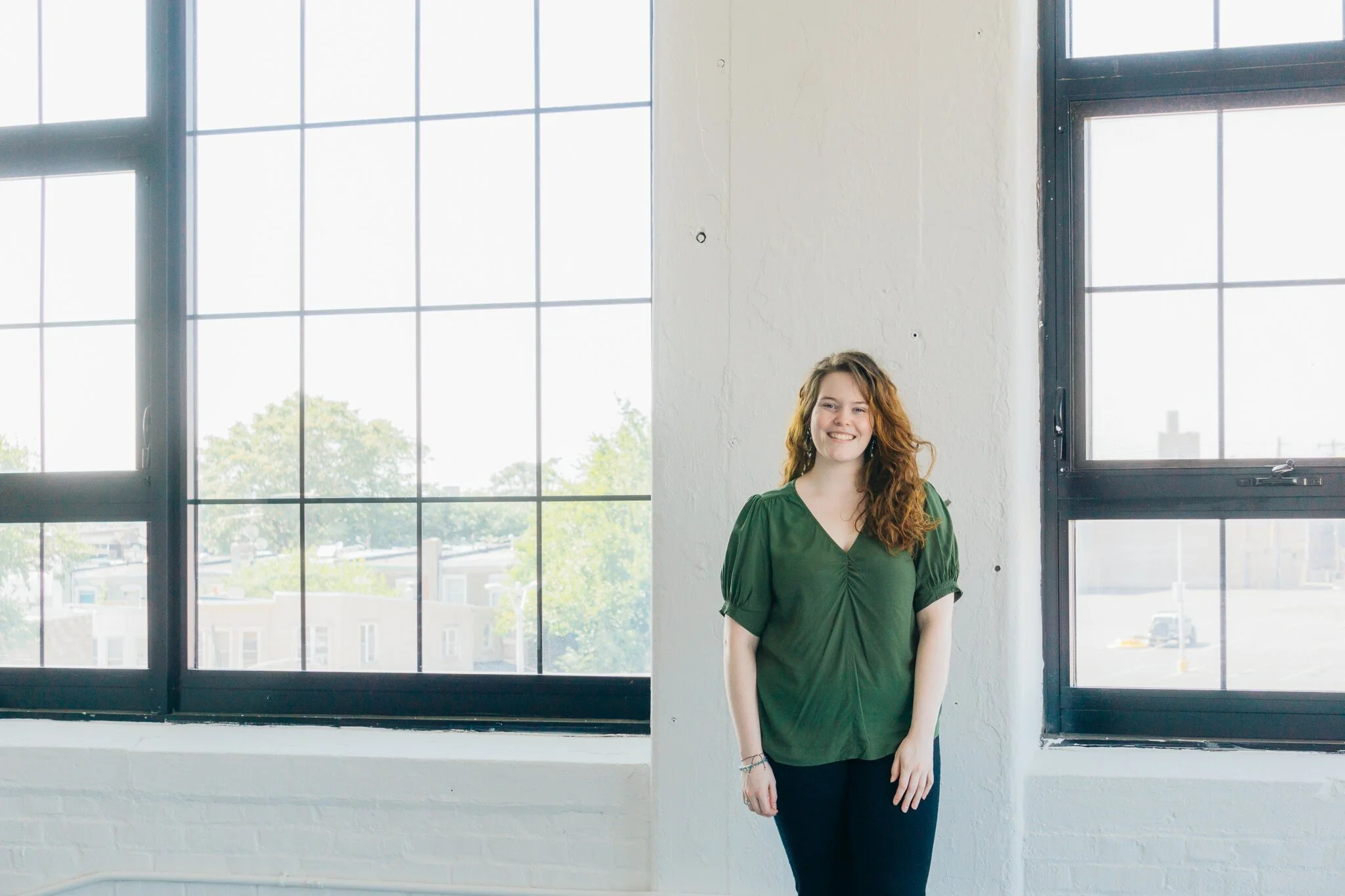
I like routine. A year ago, I had my days planned down to the minute and a to do list for every day of the week. Uncertainty was the enemy and last minute changes were accommodated but generally unwelcome. In March I quickly learned that while this may have been conducive to a pre-pandemic lifestyle, I could not expect to have the same level of control in these unprecedented times.
I couldn’t tell you what triggered the lightbulb moment I had during Fellow’s training. Previously, I would have been overwhelmed, anxious, and questioned whether or not I was capable of doing everything that is expected of a 12+ Fellow. Instead, I felt a weight lifted off of my shoulders. Realizing that there was no handbook on “How to be the Best 12+ Fellow You Can Be During a Pandemic” was comforting to me. Myself and the eight other Fellows were entering uncharted waters; although we did not have a map we knew we had each other and that we would figure this out together.
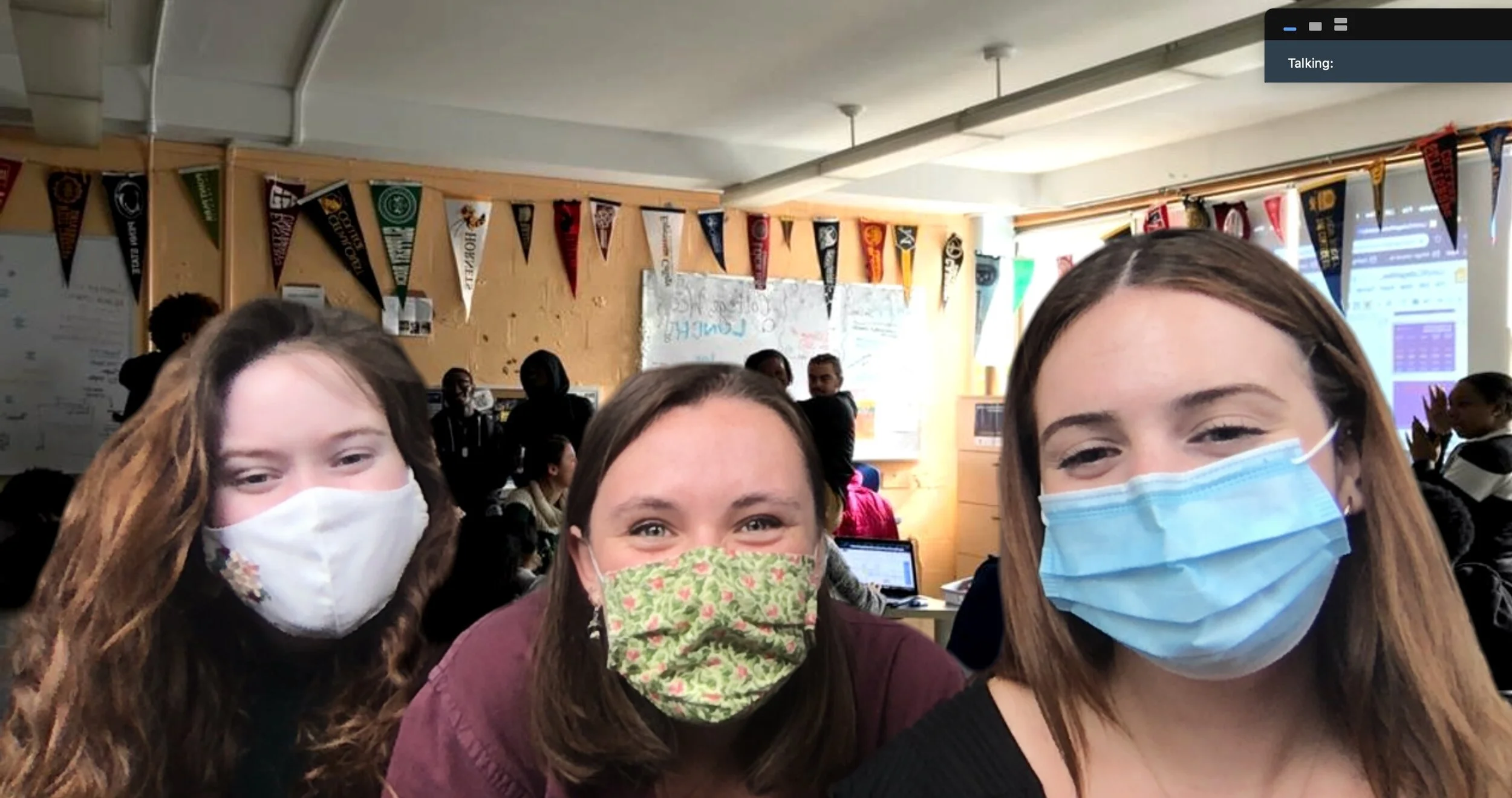
Mairead (left), Kaitlyn (center), and Liz (right) make use of Zoom backgrounds to show off the Hill-Freedman World Academy Plus Center.
Since September, I have realized that online learning, while daunting, is also an opportunity for creativity and growth. My coworkers and the students have taught me so many valuable lessons about perseverance and how to thrive in our new virtual world. Instead of keeping them to myself, I thought I would share a few of them with you.
Expect Variability
Day to day, class to class; do not expect anything to be the same. Remember that what works for some students will not work for others. For example, some students will really like your pre-RAISE Kahoot game about celebrities when they were in high school. However, the class immediately after will call you out for picking old and irrelevant celebrities (making you yourself feel momentarily old and irrelevant). Take it in stride; begin each interaction with a clean slate and try not to have any rigid expectations about how things will go and what you will accomplish. As much as you can plan ahead and attempt to preemptively troubleshoot every potential scenario, the students will always manage to surprise you.
Cherish Moments of Connection
“Since September, I have realized that online learning, while daunting, is also an opportunity for creativity and growth.”
I tend to be very content focused and goal-oriented when meeting with students. While efficient, this does not always welcome opportunities for connection. I recognize now that I would rather Liz, HFWA’s Site Director, introduce her cat, Lady, after she hops on her lap and have students engaged and excited than have that moment pass for the sake of getting through content. But moments of connection don’t always have to be spontaneous, they can also be much more intentional - like when our Impact Coordinator, Kaitie, had time at the end of a RAISE workshop to ask her breakout room how they were feeling mentally. This interaction gave us so much insight into how the freshmen are acclimating to high school that we may not have known otherwise. These connections, which would occurred organically in the schools, are not impossible to create while virtual - we just have to try a little harder.
Verbalize Praise
If a student is doing a good job, tell them. Many students are feeling anxious and are unsure if they are doing a good job. Telling them that you recognize their hard work and that they are on the right track can mean the world to them. Recently, I had an advising appointment where we got completely off topic. Instead of talking about post-secondary plans, we spent the appointment mapping out some next steps for a few long term projects and creating a list of attainable goals to work towards over the next week. Even though we didn’t complete anything that we had originally planned, I think both the student and I felt more accomplished after that meeting than we had in any of our previous appointments. At the end of the meeting I commended my student’s hard work and told them how proud they should be of themselves and then repeated my praises in a follow-up email. Our students are already working harder than they ever have before; no accomplishment is too small to be worthy of recognition.
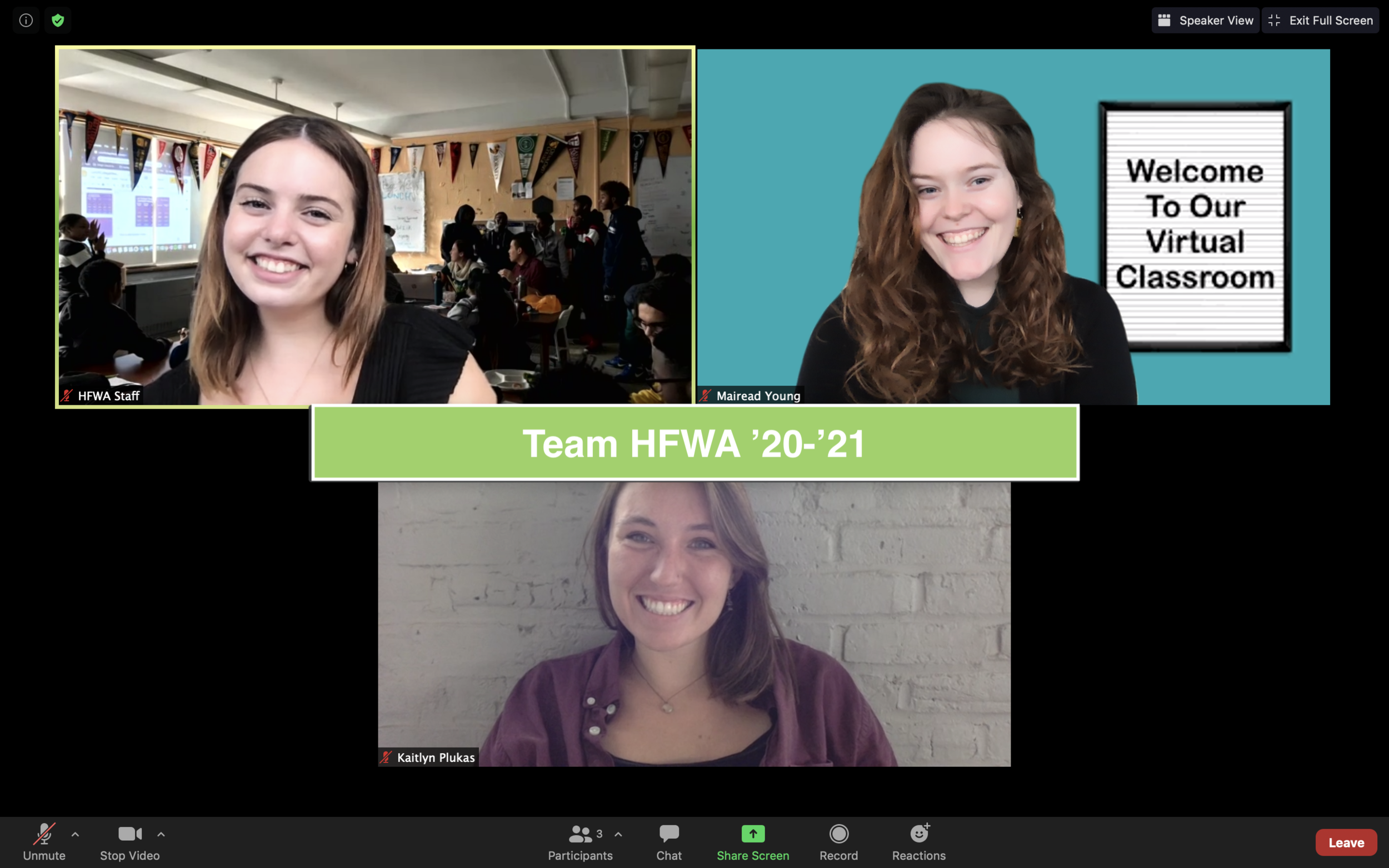
Mairead and the rest of our HFWA team prepare for a day full of advising on Zoom!
I already feel like this post is too long so I’ll keep my conclusion brief. Fellows, students, and the entire 12+ team: we will figure this out together, keep up the good work, and I cannot wait to see what this year has in store for all of us and all of the amazing things we will accomplish.